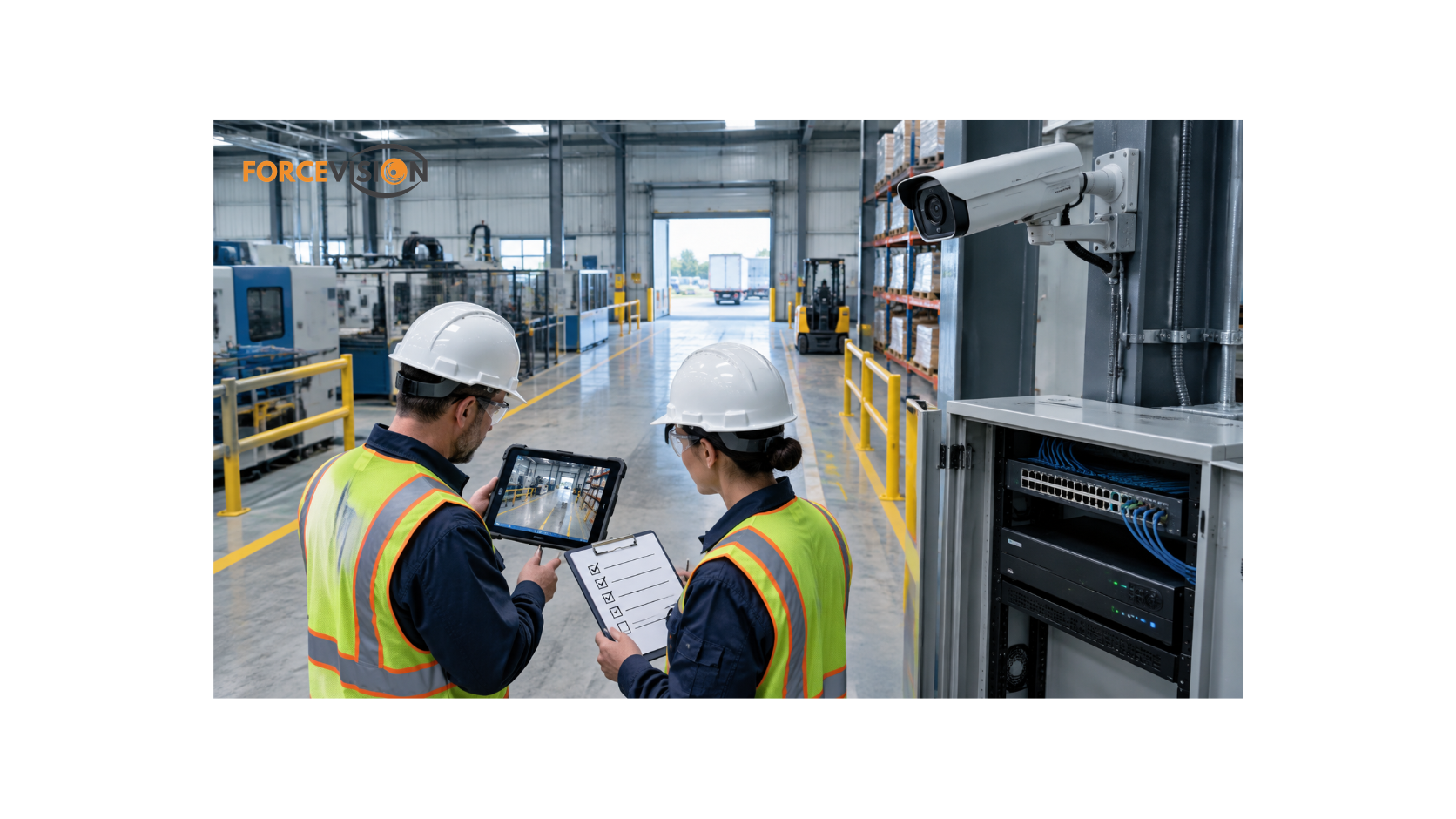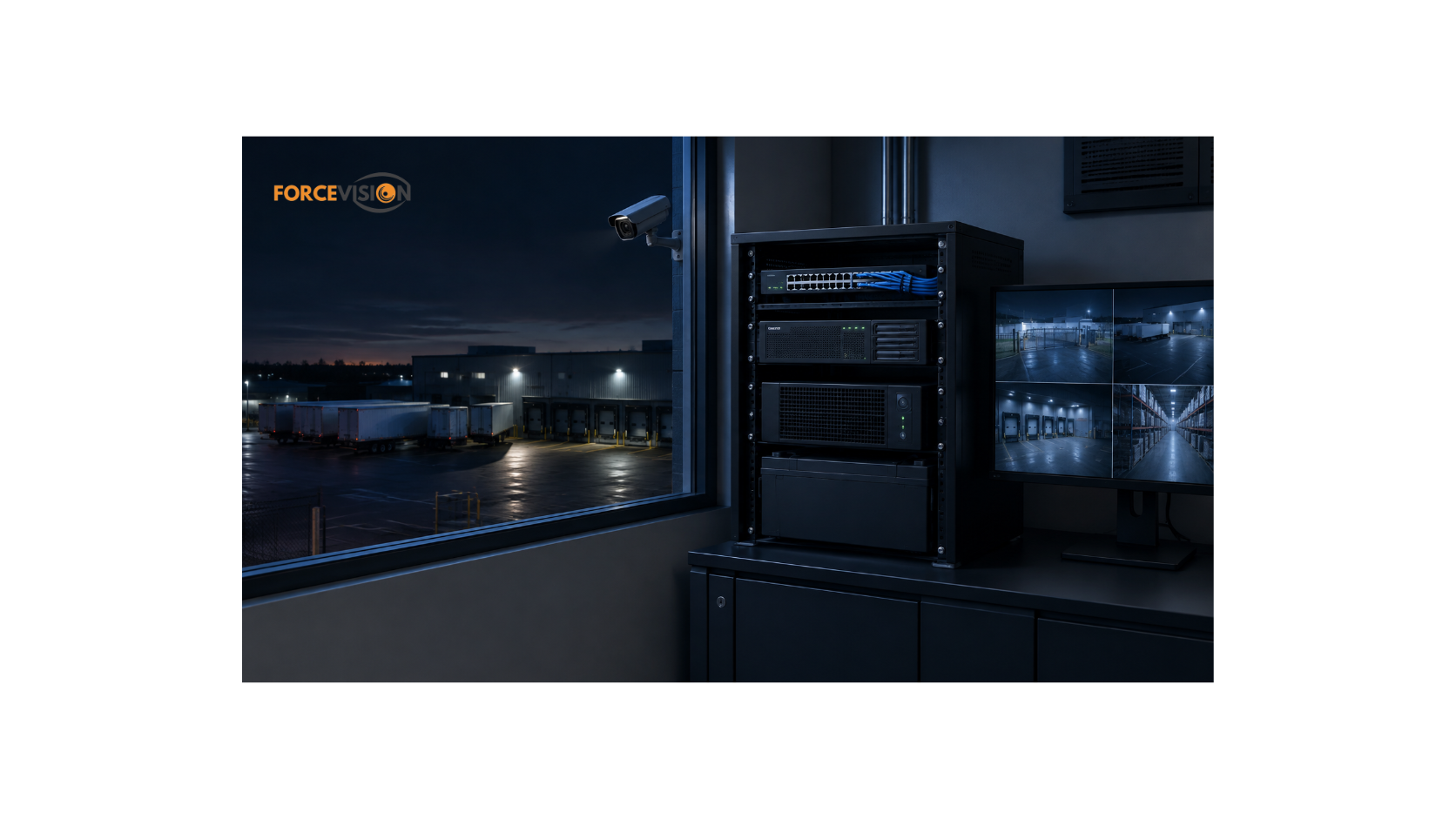
When the lights go out at a plant, the security risk goes up. Gates may fail open or closed. Alarms may drop. Workers move through dark areas. And anyone hoping to take advantage of the confusion knows the cameras may be down too.
Yet many industrial camera systems are designed as if power will always be there. A recorder plugged into a wall outlet, PoE switches with no backup, and cameras on outbuildings fed from a panel that is the first to be shed during an outage.
Winter storms, ice, equipment failures and planned maintenance shutdowns all cause outages at Ontario industrial sites. Good CCTV power backup for industrial sites means the system keeps watching when it is needed most.
Why Do Camera Systems Fail During Outages?
Most failures come from a few common gaps:
-
No UPS on the recorder. A sudden loss of power can stop recording and, in some cases, corrupt the drives.
-
No backup for PoE switches. Network switches that power cameras over Ethernet shut down, taking every connected camera with them.
-
Generator transfer gaps. Even with a standby generator, there is a delay before it takes over. Without a UPS to bridge that gap, systems reboot.
-
Remote buildings left out. Gatehouses, outbuildings and yard poles are often on circuits without backup.
-
Batteries that are never tested. A UPS that has not been checked in years may last minutes instead of hours.
What Does a Resilient Power Design Look Like?
A resilient design treats power as part of the camera system, not an afterthought. The best CCTV power backup for industrial sites is layered, so a single failed component never takes the whole system down.
UPS for core equipment. Recorders, servers, core network switches and the video management workstation should all be on an uninterruptible power supply sized for the load. Many sites aim for at least an hour of runtime, more if there is no generator.
UPS-backed PoE switches. Every switch that powers cameras should be on a UPS. Calculate the full PoE load, including heaters on outdoor cameras in winter, which can draw significantly more power.
Generator integration. Where a standby generator exists, put CCTV circuits on the essential load list. The UPS bridges the transfer gap; the generator carries the load for longer outages.
Solar or battery units for remote areas. For yard poles, perimeter fences and remote gates where running backed-up power is costly, solar-powered camera units with battery storage provide independent operation.
Cellular backup for alerts. If the site network goes down, a cellular link keeps alerts and remote viewing working.
How Can You Protect Footage During an Outage?
Recording is only useful if the footage survives. A few measures help:
-
Edge recording. Cameras with onboard SD cards can keep recording if the network or recorder fails, then fill in gaps when the connection returns.
-
RAID storage. Recorders with RAID protect against a single drive failure.
-
Off-site or cloud backup. Critical cameras can stream to an off-site or cloud recorder.
-
Graceful shutdown. Configure the UPS to shut down the recorder safely before the battery runs out, protecting the drives.
What Should You Monitor and Test?
Power systems need regular attention:
-
Health monitoring. The video management system should alert when a camera, switch or recorder goes offline, and when a UPS switches to battery.
-
Battery testing. Test UPS batteries at least annually and replace them on the manufacturer’s schedule, typically every three to five years.
-
Load review. Re-check UPS sizing whenever cameras are added.
-
Outage drills. During planned shutdowns, confirm that cameras and recorders stay up and that alerts reach the right people.
-
Winter checks. Confirm heater loads and battery performance before the cold arrives, since batteries lose capacity in low temperatures.
How Does Power Resilience Support Safety and Operations?
During an outage, security teams and supervisors need to see what is happening: whether people are stuck in dark areas, whether gates are secure and whether equipment shut down safely. Cameras that stay up help them account for workers and respond faster.
For operations, uninterrupted footage gives a clear record of what happened when the power failed, which helps engineering teams understand equipment behaviour and plan improvements. For insurance, it shows that protective systems kept working.
ForceVision designs camera systems for large plants, yards and logistics hubs across Southern Ontario with power resilience built in, from UPS sizing to solar-powered perimeter units. If you would like a review of how your system would cope with an outage, our team can assess it with you.
The Takeaway
Next time you have a planned shutdown, walk the site with the power off and check which cameras are still recording. If the answer surprises you, put CCTV power backup for industrial sites on your list before winter storms do the test for you.
FAQ
Q: How long should a CCTV UPS last?
A: Many industrial sites aim for at least an hour of runtime for core equipment, longer if there is no standby generator.
Q: Do outdoor camera heaters affect backup sizing?
A: Yes. Heaters can draw significant extra power in winter, so include them in PoE and UPS load calculations.
Q: Can cameras keep recording if the recorder goes down?
A: Cameras with edge recording on SD cards can, then backfill footage when the recorder comes back online.
Q: How often should UPS batteries be replaced?
A: Test them at least annually and replace them on the manufacturer’s schedule, typically every three to five years.