Cargo theft is changing before the truck moves
Cargo theft at Canadian logistics hubs is no longer limited to a thief cutting a lock or driving away with an unattended trailer. Increasingly, the threat begins with a fraudulent pickup request, altered delivery information, impersonated carrier, or compromised dispatch communication.
That shift matters in Southern Ontario. The GTA remains a high-risk freight region, and industry reporting has identified strategic theft—where criminals use deception to obtain loads—as a growing concern for supply chains in Canada. For a distribution centre in Mississauga, a rail-served warehouse in Brampton, or a cross-dock facility near Highway 401, the vulnerable moment may be the handoff itself: the point at which a legitimate-looking driver, truck, document, or instruction is accepted without enough independent verification.insurancebusinessmag
Industrial operators cannot solve that problem with a single gate camera. They need a site-wide evidence system that connects vehicle arrival, driver identity, dock assignment, seal condition, trailer movement, and departure approval. This is where industrial CCTV for Ontario freight handoffs becomes an operational control rather than simply a security expense.
Why are freight handoffs vulnerable?
Freight moves through a chain of decisions. Dispatch teams authorize pickups. Gate staff receive drivers. Yard teams direct trailers. Dock personnel release product. Security teams supervise access. If even one of these steps is handled with incomplete information, a convincing fraudulent pickup can move through the process before anyone recognizes the discrepancy.
Recent cargo-risk guidance points to the rising use of fraudulent carriers, false identities, altered bills of lading, and digital deception. These methods can look legitimate at first glance because the person at the gate may have a clean vehicle, professional paperwork, and accurate knowledge of the shipment.elementfleet+1
For large industrial sites, that creates two immediate concerns. First, a high-value shipment can disappear without an obvious forced entry event. Second, the investigation becomes difficult if the site cannot reconstruct who arrived, what vehicle entered, which trailer was released, and whether normal release procedures were followed.
The lesson is not to treat employees with suspicion. It is to give good employees reliable tools. A clear, auditable handoff process protects the dispatcher who challenges an irregular request, the guard who delays access, and the dock supervisor who needs proof that a trailer was released correctly.
How can CCTV verify a legitimate pickup?
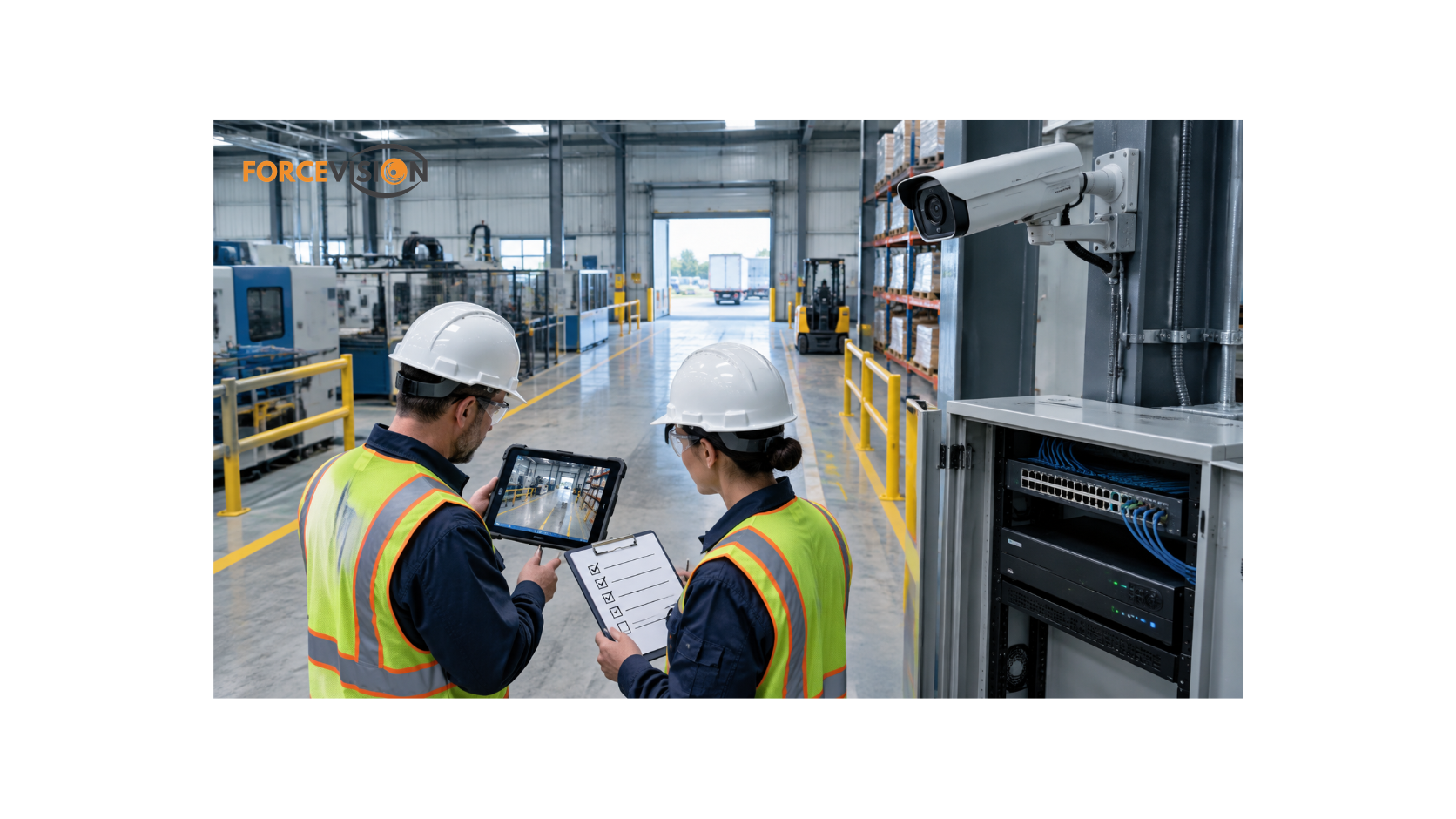
A well-designed industrial video system records the full handoff journey, not just the gate opening. For a busy logistics campus, that usually means coverage across entry lanes, guardhouses, licence plates, staging lanes, loading docks, trailer rows, perimeter routes, and exit points.
At the front gate, high-resolution cameras can document the tractor, trailer, driver approach, company markings, and licence plate. Automatic number plate recognition can help compare arrivals with an approved pickup list, while a dedicated overview camera provides context around the vehicle and lane.
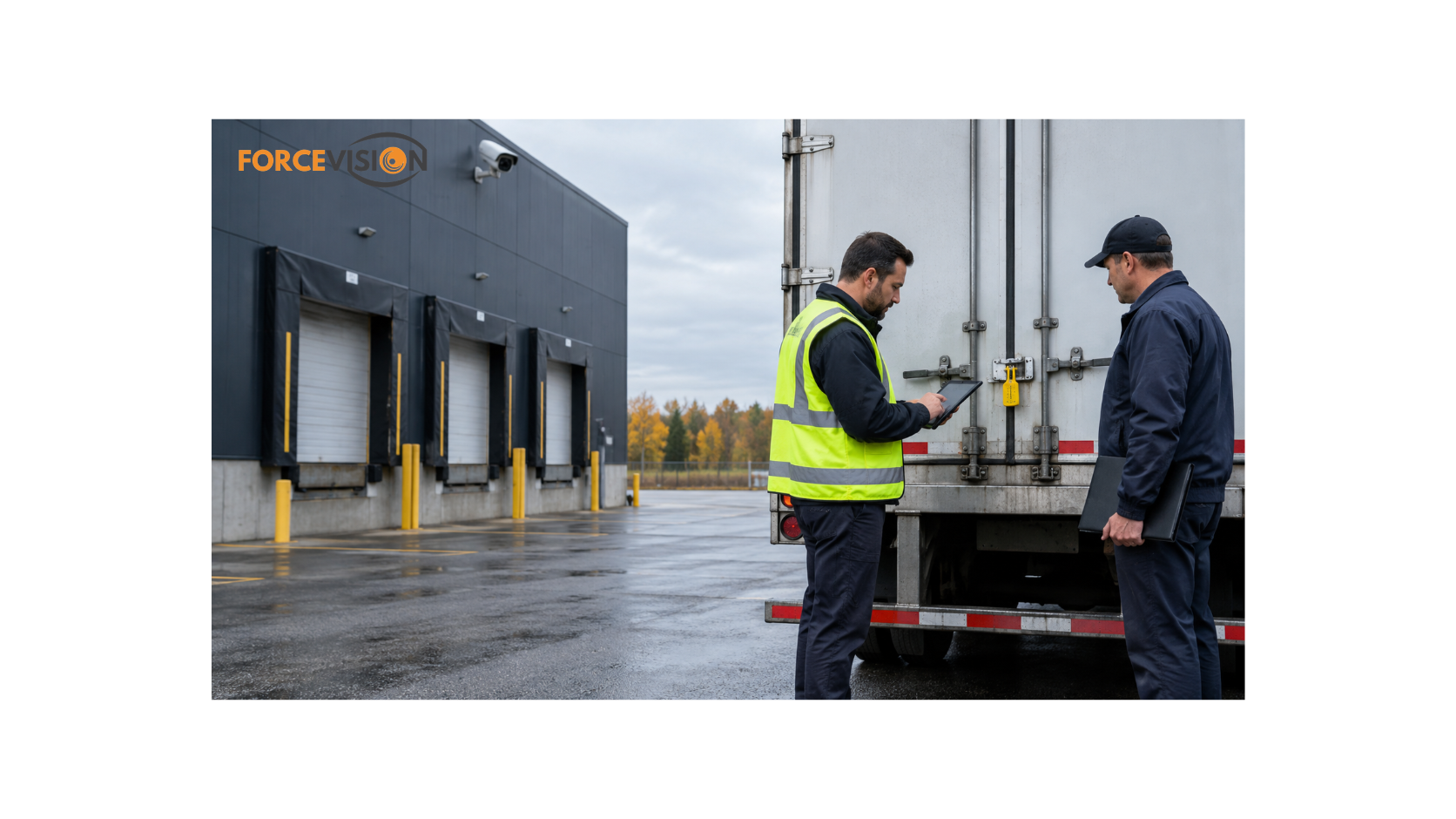
At the loading area, cameras should capture trailer numbers, seal checks, dock-door activity, forklift loading activity, and the final release process. The goal is not to watch every worker continuously. The goal is to create a trustworthy event record when a load changes custody.
An effective process can pair video with operational records:
-
Gate appointment or pickup reference
-
Approved carrier and driver verification
-
Tractor and trailer identification
-
Trailer seal number or smart-seal status
-
Dock assignment and loading completion
-
Supervisor release confirmation
-
Exit timestamp and departure route
When these items align, the organization has a stronger chain of custody. When one does not align—such as a truck entering with a plate that does not match the appointment—video analytics and trained staff can trigger escalation before the shipment leaves the property.
What does a 64-camera logistics system cover?
At a large distribution centre, 64 cameras are not excessive. They are often the beginning of complete visibility across the places where freight, people, equipment, and decisions intersect.
A practical camera plan may include fixed cameras at every entrance and exit, panoramic views of trailer rows, licence-plate cameras at gate lanes, domes above dock doors, rugged bullet cameras along the perimeter, and PTZ cameras for wide outdoor yards. Thermal cameras may also be useful for remote perimeter areas where night-time visibility is poor.
The system should be supported by an industrial-grade NVR or enterprise video platform with enough retention for the site’s risk profile. A logistics operator may need to investigate a discrepancy weeks after a shipment was released, particularly when a customer dispute, insurer inquiry, or police investigation takes time to develop.
This is where industrial CCTV for Ontario freight handoffs delivers value beyond deterrence. It allows security, operations, claims, and leadership teams to retrieve a coherent timeline rather than searching through disconnected cameras and incomplete notes.
How should video support people and processes?
The most resilient freight-security program combines physical security, digital controls, and operational discipline. Insurance and fleet-security guidance recommends layered measures including monitored facilities, controlled access, trailer locks, GPS, door sensors, geofencing, secure communications, and verification of unusual changes.elementfleet+1
Video supports those controls by answering the physical questions: Did the assigned tractor arrive? Was the correct trailer moved? Did the seal appear intact? Did the driver leave through the expected gate? Did anyone access the freight outside normal procedures?
It also supports workforce retention and safety culture. When footage is used fairly, it can identify unclear yard-routing practices, congested staging areas, poor trailer-seal workflows, or confusing gate instructions. Those are process problems that may be corrected with training and better design rather than blame.
For example, if drivers repeatedly stop in an uncontrolled part of the yard because the directional signage is unclear, a camera review can reveal a process issue before it becomes a collision, delay, or security gap.
Build a handoff audit before the next peak period
Every logistics operator should run a short freight-release audit before the next peak shipping window. Walk the route from booking confirmation to exit gate and ask where a fraudulent request could be accepted without a second verification channel.
Review whether cameras can clearly identify a tractor, trailer, plate, dock door, seal check, and release interaction. Test retrieval time as well: if a manager cannot assemble a complete handoff timeline within minutes, the system may be recording video without producing usable operational intelligence.
ForceVision helps large logistics, warehousing, rail, and industrial sites across Southern Ontario design video systems around their real freight movements and risk points. If you are assessing industrial CCTV for Ontario freight handoffs, ForceVision can walk through your gate, dock, yard, and retention requirements with a no-pressure site assessment.
The practical takeaway is simple: protect the moment when custody changes. A secure trailer lock is valuable, but a verified, documented, visible handoff is what helps prevent the wrong truck from leaving with the right load.
FAQ
Can CCTV prevent strategic cargo theft?
CCTV is one layer of prevention. It provides visible deterrence, documents people and vehicles, supports gate verification, and helps teams investigate irregular pickups quickly.
Which camera locations matter most at a logistics hub?
Prioritize entry and exit gates, licence-plate capture lanes, guardhouses, trailer rows, dock doors, loading zones, perimeter routes, and high-value staging areas.
How long should freight-handoff footage be retained?
Retention depends on risk, shipment value, insurer expectations, incident-discovery timelines, and storage capacity. Large operators should set a documented retention policy rather than relying on a default recorder setting.
Does video replace carrier verification?
No. Video should complement carrier vetting, multi-factor authentication, secure dispatch processes, GPS, seals, and dual-channel confirmation of any change to a pickup or delivery request.