Sarnia’s rail network just got bigger. VIP Rail, owned by Alpenglow Rail, has completed a new yard on Kenny Street in the city’s south end, adding 750 railcar storage spots and bringing its Sarnia-area capacity to more than 2,150, according to Sarnia News Today. The terminal provides storage, switching, transloading, cleaning and repair for Chemical Valley customers, and interchanges with CN, CPKC and CSX, as Progressive Railroading reported.
VIP Rail’s chief strategy officer, Josh Huster, said the added capacity lets customers manage railcar fleets, stage equipment closer to operations and respond to changing production needs. That is good news for the region’s refiners and chemical producers.
It also highlights a security challenge that every storage yard, siding and transload terminal in Ontario shares: hundreds of railcars sitting still, often for weeks, across a wide and open footprint.
Why Are Stored Railcars a Distinct Security Risk?
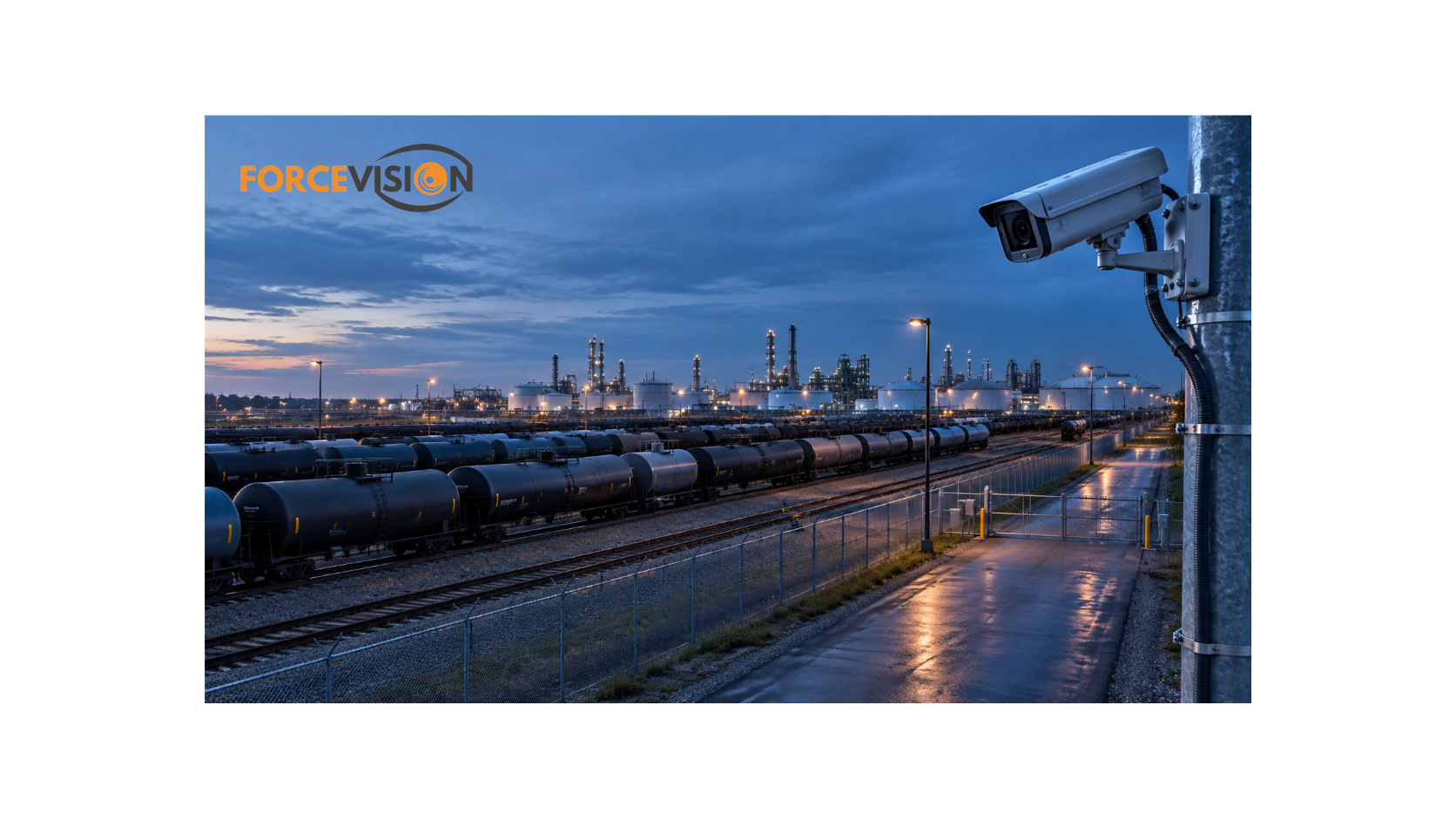
A moving train is supervised constantly. A stored car is not. Yards and sidings are long and narrow, hard to fence completely, and often next to roads, fields or neighbourhoods.
Stored cars face several risks:
-
Trespass, which puts people in danger around moving equipment during switching.
-
Vandalism and graffiti, which can obscure placards and reporting marks.
-
Theft of components, such as brake parts, fittings and tools.
-
Tampering, including opened valves, hatches or loosened fittings on tank cars that may still hold residue.
In Chemical Valley, many stored cars are tank cars that carried petroleum products or chemicals. Even “empty” residue cars can hold hazardous product.
What Do Canadian Rail Security Rules Expect?
Canada’s Transportation of Dangerous Goods by Rail Security Regulations set the baseline. Railway carriers and railway loaders that handle the security-sensitive dangerous goods listed in Schedule 1 must have a written security plan. The plan must include measures to prevent unauthorized access to those goods and to the railway vehicles carrying them.
Carriers must also visually inspect placarded dangerous goods cars for signs of tampering when they are accepted for transport and when they are placed in a train. If they find tampering or a suspicious item, they must determine whether security has been compromised before moving the car. Signs of tampering that compromise security must be reported to Transport Canada.
Transport Canada’s industry guidance explains how those plans should be built. Cameras are not mandated by the rules, but they are one of the most practical ways to deliver the unauthorized-access measures a plan describes.
How Does Railcar Storage Yard Security in Ontario Work in Practice?
Good railcar storage yard security in Ontario combines detection, verification and records.
Perimeter detection along the tracks. Thermal cameras with intrusion analytics can watch long stretches of track and fence line at night. They detect a person walking between cuts of cars, even in darkness or snow, and alert a monitoring centre or yard office.
PTZ cameras for verification. Pan-tilt-zoom cameras on high masts let operators zoom in on an alert, follow a trespasser and guide police or railway police to the right location.
Gate and road crossings. Licence plate recognition cameras at yard entrances and access roads log every vehicle, which supports contractor management and investigations.
Car identification. Cameras with optical character recognition can read reporting marks and car numbers as cars move in and out, complementing automatic equipment identification readers and creating a visual record of each car’s condition on arrival.
Tampering evidence. Recorded footage of a car’s arrival, storage and departure helps inspectors determine whether a valve or hatch was opened in the yard or arrived that way.
How Does Video Support Yard Operations and Safety?
The same cameras pay off beyond security. Yard managers can see where cars are staged, how quickly switching moves happen and where congestion builds. Safety leaders can review how crews work around moving cars and coach on real examples.
For crews working long nights in a large, quiet yard, knowing the site is watched by more than one set of eyes makes the work safer and less isolating. That matters for retaining experienced rail workers.
What Should a Storage Yard Camera Plan Include?
For a yard with several hundred to a few thousand car spots, a 64- to 128-camera design commonly includes:
-
Thermal analytics cameras every few hundred metres along the perimeter.
-
PTZ cameras on masts at key junctions and storage tracks.
-
LPR cameras at every vehicle entrance.
-
Car-number reading cameras at yard leads.
-
Cameras at transload, cleaning and repair areas.
-
Wireless or fibre backhaul designed for long, linear sites.
ForceVision designs camera systems for rail yards, transload terminals and industrial sidings across Southern Ontario. If you are expanding storage capacity or reviewing your rail security plan, we are happy to talk through coverage that fits your layout.
The Takeaway
Walk your storage tracks at night and ask: if someone opened a hatch on a residue car at the far end of track 12, how would you know, and when? If the answer is “at the next inspection,” it is time to put railcar storage yard security in Ontario on your next security plan review.
FAQ
Q: Do Canadian rules require cameras at railcar storage yards?
A: No specific camera mandate exists, but the TDG rail security regulations require security plans with measures against unauthorized access, and cameras are a practical way to deliver them.
Q: How do cameras help with tampering inspections?
A: Footage of a car’s arrival, storage and departure helps determine whether tampering happened in the yard and supports reporting decisions.
Q: What works best for long, linear rail yards?
A: Thermal analytics cameras for perimeter detection, mast-mounted PTZ cameras for verification and wireless or fibre backhaul for long distances.
Q: Can yard cameras improve operations?
A: Yes. They show car staging, switching activity and congestion, and support safety coaching for crews.