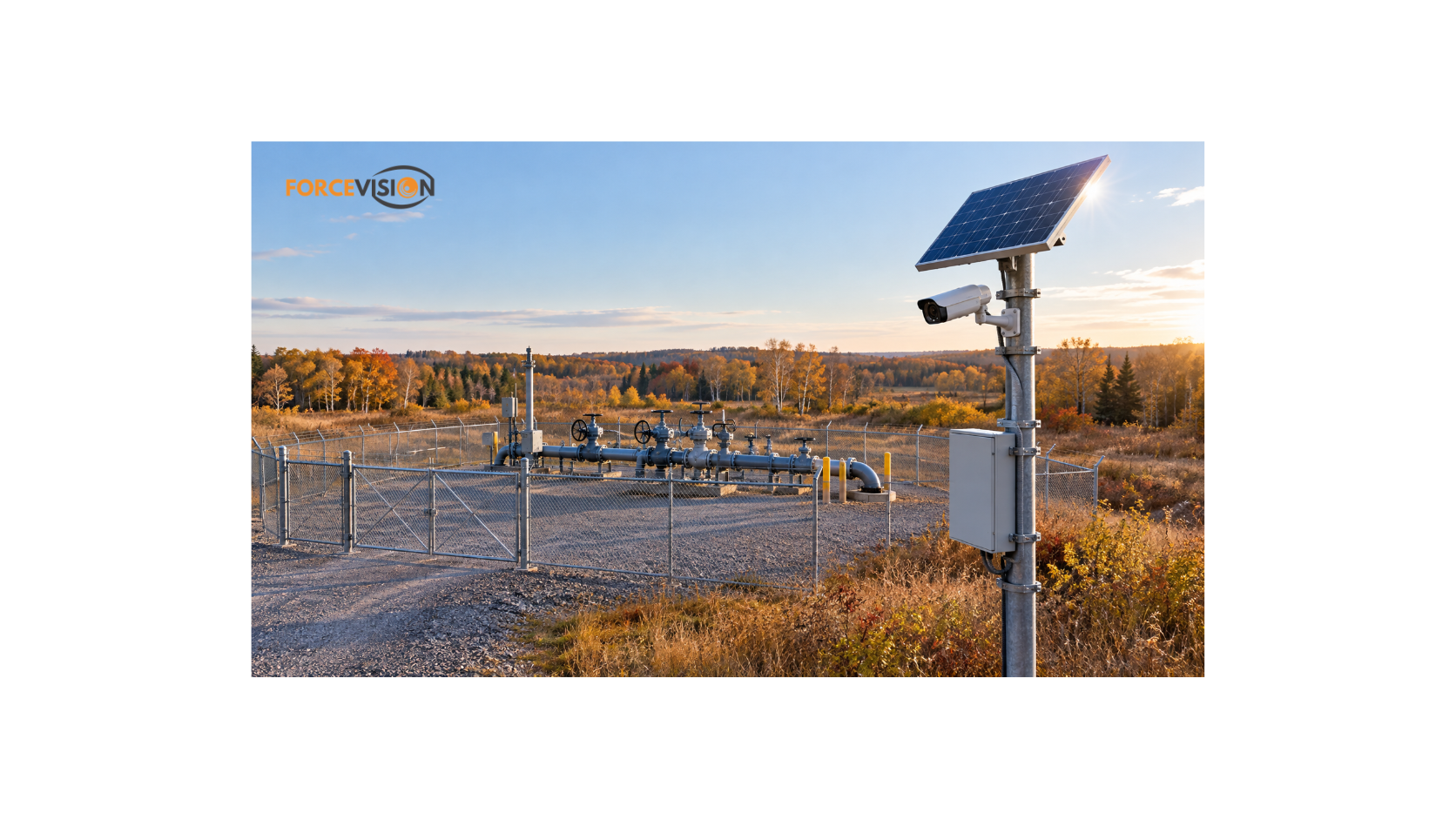
Drive the back roads of Lambton, Middlesex or Northumberland and you will pass them without noticing: small fenced compounds with a few pipes, valves and a control cabinet. These are valve stations, meter sites and pump stations, the quiet infrastructure that keeps oil, gas and liquids moving through Ontario’s pipeline network.
They are also some of the hardest assets to protect. Most have no staff on site, no reliable power for extra equipment and no network connection beyond the control system. Yet a single act of vandalism, theft or tampering at one of them can have consequences far beyond the fence.
For operators regulated by the Canada Energy Regulator (CER), the expectation is clear. Under section 47.1 of the CER Onshore Pipeline Regulations, a company must develop, implement and maintain a security management program that anticipates, prevents, manages and mitigates conditions that could adversely affect people, property or the environment. Section 55 requires that program to be audited at least every three years.
Why Are Remote Pipeline Sites Vulnerable?
Remote sites share a set of risks:
-
Isolation. Hours can pass before anyone notices a cut fence or open cabinet.
-
Copper and equipment theft. Grounding wire, cables, batteries and solar panels attract thieves.
-
Vandalism. Graffiti, shot-out lights and damaged signage are common at rural sites.
-
Tampering. Valves, control cabinets and communication equipment are tempting targets for protest or sabotage.
-
Unauthorized ground disturbance. Farm or construction work near the right-of-way can threaten buried lines.
The CER says a company’s security program must consider what is being protected, its type, size, location and level of importance, and that companies must follow CSA Z246.1, the security management standard for the petroleum and natural gas industry.
How Does Solar CCTV for Pipeline Valve Sites Work?
Solar CCTV for pipeline valve sites removes the two biggest barriers to remote surveillance: power and connectivity.
Self-contained power. A solar panel, battery bank and charge controller power the cameras and communications. Systems designed for Canadian winters use larger batteries and panels angled for low winter sun, with enough reserve to run through several cloudy days.
Cellular or satellite connectivity. An LTE or 5G modem, or satellite link where cell coverage is weak, sends alerts and video clips to a monitoring centre or control room. Cameras record locally, so footage is not lost if the link drops.
Low-power analytics. Modern cameras run intrusion analytics on the device and only send video when something happens. That saves both power and data.
Thermal detection. Thermal cameras detect people and vehicles at night and in poor weather, which is when most remote-site incidents occur.
Deterrence. Visible cameras, signage, strobes and speakers for live or recorded warnings discourage intruders before they reach the fence.
Where Should Cameras Go at a Valve Site?
For a typical fenced valve or meter site, a practical layout includes:
-
A thermal camera covering the fence line and approach road.
-
A visible-light camera for identification at the gate.
-
A camera covering the valve assembly and control cabinet.
-
Door or cabinet sensors linked to the camera system.
-
A pole-mounted solar and battery unit sized for winter.
For larger pump or compressor stations, the same approach scales to a 32- or 64-camera design, often with grid power and fibre, but with solar units filling gaps on outlying parts of the site.
How Does Video Support the Security Program and Audits?
A camera system is not a security program on its own. It is one of the controls that program relies on. Video supports CER expectations in several ways:
-
Prevention and detection of unauthorized access.
-
Response, by giving the control room live eyes on a site before sending staff.
-
Records, with time-stamped events and footage that document incidents and responses.
-
Audit evidence, showing that controls are in place and working.
Because CSA Z246.1 also addresses cybersecurity, connected camera systems must be designed securely: encrypted links, strong authentication, patched firmware and separation from operational control networks.
How Does Remote Video Help Field Crews?
Remote video also benefits operations and safety. Before a technician drives an hour to a site after an alarm, the control room can check the cameras. Is the gate open? Is someone on site? Is there visible damage? That saves wasted trips and keeps lone workers out of risky situations.
Cameras can also confirm that contractors arrived, worked safely and left the site secured. For pipeline companies trying to retain experienced field staff, reducing unnecessary night callouts is a real benefit.
ForceVision designs solar and cellular camera systems for remote industrial and energy sites across Southern Ontario, from the Sarnia-Lambton corridor to eastern Ontario. If you are reviewing remote-site security, we can help you plan coverage that fits your security program.
The Takeaway
List your five most remote sites and ask: if someone cut the fence tonight, how long before you knew? If the answer is “the next scheduled visit,” it is time to evaluate solar CCTV for pipeline valve sites as part of your security management program.
FAQ
Q: Do CER rules require cameras at valve sites?
A: The regulations require a security management program that anticipates, prevents, manages and mitigates risks, following CSA Z246.1. Cameras are a common control, not a specific mandate.
Q: Can solar cameras run through an Ontario winter?
A: Yes, if they are designed for it, with larger batteries, panels angled for winter sun and enough reserve for several cloudy days.
Q: What connectivity do remote cameras use?
A: Usually LTE or 5G cellular, with satellite as a backup in areas with poor coverage. Cameras record locally in case the link drops.
Q: How do cameras help field crews?
A: The control room can check a site on camera before dispatch, avoiding wasted trips and reducing risk for lone workers.