On January 20, 2024, a failed seal inside a pump assembly at NOVA Chemicals’ Corunna site on Petrolia Line released about 1,475 litres of process material, mostly benzene. It escaped through the pump’s gearbox vent as liquid and vapour, pooled on the ground and froze, according to The Sarnia Journal. No adverse health impacts were reported.
The penalty, disclosed this month, was not about the leak itself. NOVA was convicted of failing to notify the Ministry of the Environment, Conservation and Parks promptly. The company issued a local community alert, but notified the ministry about two hours after the spill, after ministry staff directed it to report. The fine was $150,000 plus a $37,500 surcharge, as Sarnia News Today reported.
Under Ontario’s Environmental Protection Act, a reportable spill must be reported “forthwith,” and the duty starts when the responsible party knew or ought to have known a spill occurred. In practice, that means the clock starts at detection, and every minute of confusion in the control room counts.
Why Does Reporting Speed Matter So Much in Chemical Valley?
Sarnia-Lambton’s petrochemical cluster operates under close scrutiny. In 2024, benzene levels far above allowable limits sickened members of Aamjiwnaang First Nation, leading the province to pull INEOS Styrolution’s environmental approval. The plant later closed, according to the Petrolia Lambton Independent.
Since then, regulators, neighbours and First Nations communities have expected faster, clearer information whenever something goes wrong. For refiners, chemical producers and pipeline terminals, from Imperial and Shell to mid-size specialty plants, the reputational cost of a slow or muddled report can exceed the fine.
What Slows Down Spill Reporting Inside a Plant?
The reporting delay is rarely about bad intent. More often, it comes from uncertainty in the first minutes:
-
An alarm or odour complaint arrives, but nobody can see the source.
-
Operators are sent out to investigate, often in winter darkness.
-
Shift supervisors focus on isolating the leak, which is the right priority.
-
Nobody is sure yet how much was released or whether it is reportable.
Meanwhile, the clock is running. By the time the picture is clear, the “forthwith” window may already be gone.
How Does Video Monitoring for Spill Detection at Ontario Plants Help?
Video monitoring for spill detection at Ontario plants does not replace gas detectors, process alarms or trained operators. It gives them eyes on the problem from the first second.
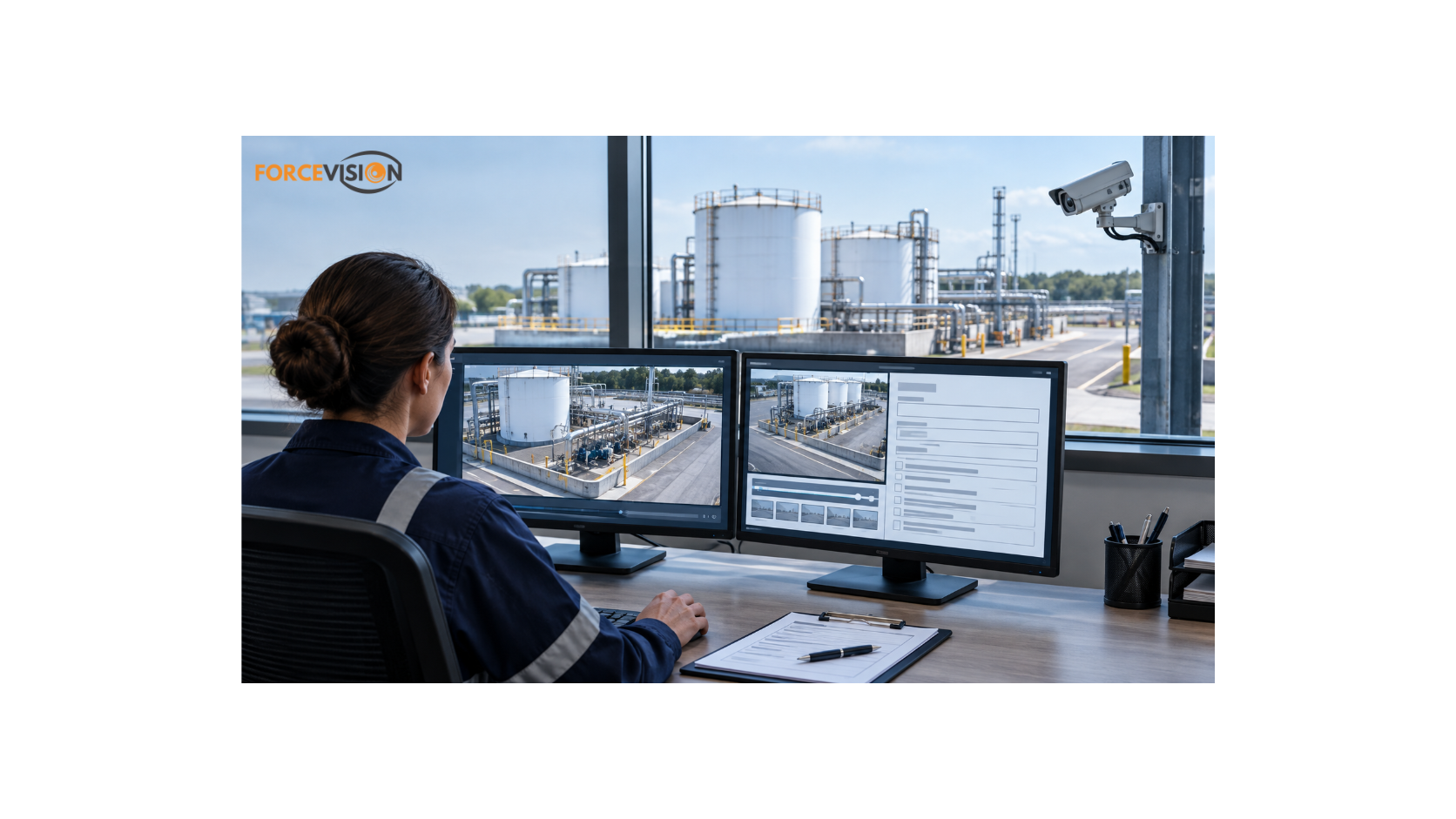
Cameras on high-risk equipment. Fixed cameras on pump rows, seals, manifolds, tank bases and loading racks let control room operators see what is happening the moment an alarm sounds, without waiting for a field check.
Optical gas imaging where it fits. Specialized optical gas imaging (OGI) cameras can make many hydrocarbon vapours visible as a plume on screen. Fixed OGI units on the highest-risk equipment can provide continuous visual leak detection, alongside the handheld OGI surveys many plants already run for leak detection and repair.
Thermal views for liquids and night conditions. Thermal cameras show temperature differences, which can reveal a spreading liquid pool, steam or vapour cloud in the dark or in winter conditions like the January Corunna release.
Automatic event bookmarks. When a gas alarm, pump trip or high-level alarm triggers, the video system can bookmark the footage from every nearby camera. That creates a ready-made timeline: first sign of release, first operator response, isolation, cleanup.
How Does Footage Support Regulators and Neighbours?
A clear, time-stamped video record helps in three ways.
First, it speeds the decision to report. When the shift supervisor can see the size and nature of the release, they can make the call faster and with more confidence.
Second, it supports accurate reporting. Estimates of volume, duration and containment are easier to defend with footage.
Third, it supports the investigation and the lessons learned. Reviewing the sequence shows where minutes were lost and how to tighten procedures, which is exactly what regulators want to see after an incident.
Plants should also build video into their spill-response procedures. A simple step, such as “the control room confirms the release on camera and starts the reporting checklist,” can remove ambiguity at the worst moment.
What Does a Practical Layout Look Like?
For a mid-size petrochemical plant or terminal, a 64-camera design focused on leak and spill visibility might include:
-
Fixed cameras on every pump row, compressor and critical seal area.
-
Thermal cameras covering tank dikes, sumps and drainage outfalls.
-
Fixed OGI cameras on the highest-consequence equipment.
-
PTZ cameras on elevated mounts for wide-area verification.
-
Hazardous-location rated housings in classified areas.
-
Integration with the control system so alarms call up the right camera automatically.
ForceVision works with energy and industrial sites from the Sarnia-Lambton corridor to Hamilton to design camera systems that support operations, environmental compliance and security on one platform. If you are reviewing spill readiness, we are glad to help you map coverage against your real risk points.
The Takeaway
Pull your last three process alarms and ask how long it took to confirm what was happening, and how you know. If the answer depends on someone walking out to look, it is worth adding video monitoring for spill detection at Ontario plants to your next spill-response review.
FAQ
Q: Can cameras replace gas detectors for spill detection?
A: No. Cameras complement certified gas and process alarms by giving operators instant visual confirmation and a time-stamped record.
Q: What is optical gas imaging?
A: OGI cameras use specialized infrared sensors that make many hydrocarbon gases visible as a plume on screen, helping locate leaks quickly.
Q: How does video help with “forthwith” reporting duties?
A: It shortens the time between an alarm and a confident decision to report, and creates a timeline that supports accurate reports and investigations.
Q: Are special cameras needed in hazardous areas?
A: Yes. Equipment in classified locations must carry the appropriate hazardous-location rating, selected by qualified designers.