On September 24, 2025, a worker at Kiwi Constructors Ltd. in Guelph was walking through the production area as a large steel table moved from one workstation to another. The worker stepped into its path and was struck.
Kiwi Constructors makes precast concrete building components using a semi-automated system that moves heavy steel tables between stations. Portions of that movement could not be seen from the control station. The only warning was a white light while tables were in motion, according to the Ontario government court bulletin.
The Ministry of Labour found the warning system inadequate. The company pleaded guilty to failing to ensure the equipment had an adequate automatic warning system, and was fined $70,000 on September 18, 2026, plus a 25 per cent victim fine surcharge.
What Does Ontario Require for Equipment Out of View?
The conviction was under section 33 of Regulation 851, the Industrial Establishments regulation. The bulletin explains that it requires employers to ensure workers are warned when equipment that cannot be fully seen from the control station starts moving and could put a worker at risk.
That describes a lot of equipment in modern Ontario plants: transfer cars, shuttle tables, automated guided vehicles, overhead cranes, conveyors, palletizers, robotic cells and automated storage systems. As automation grows, so does the number of places where an operator cannot see everything that moves.
Layouts also change. A new workstation, a relocated rack or a temporary storage area can create a blind spot that did not exist when the line was commissioned. A warning system that was adequate on day one may not be adequate a year later, which is why coverage should be reviewed whenever the floor plan changes.
Why Isn’t a Warning Light Always Enough?
A single light has limits. Workers get used to it, especially when it is on most of the shift. It may be out of sight from where someone is walking. It does not know whether anyone is actually in the path.
A strong warning system combines audible and visual alerts, positioned where people walk, and ideally responds to whether someone is actually in danger. That last part is where cameras and analytics come in.
How Do Equipment Movement Warning Cameras Work?
Equipment movement warning cameras give operators eyes on the areas they cannot see, and give the system a way to detect people in the path.
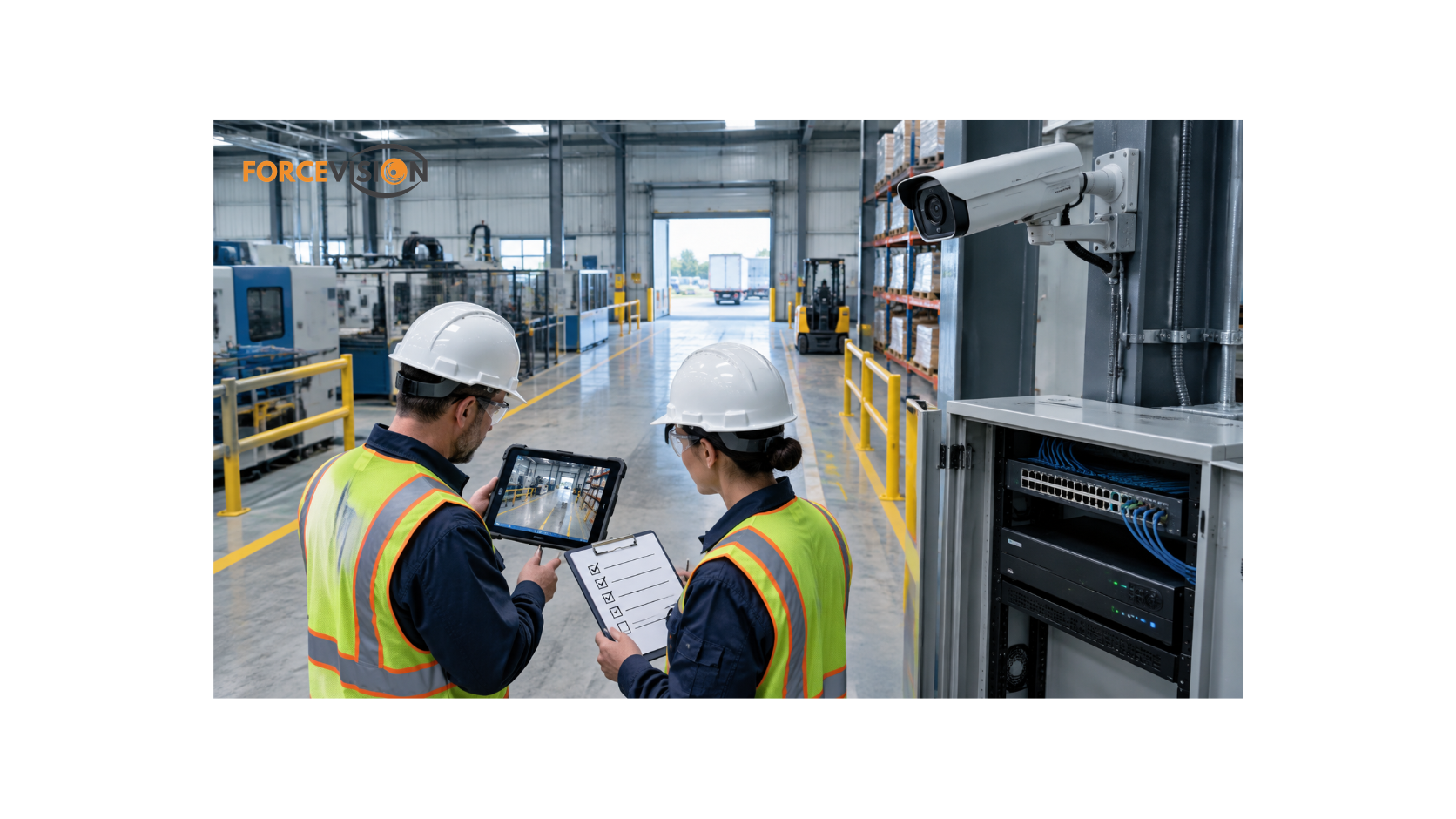
Blind-spot views at the control station. Cameras covering the travel path, displayed on a monitor at the control station, let operators confirm the path is clear before starting a move. For long lines, multiple camera views can be shown together.
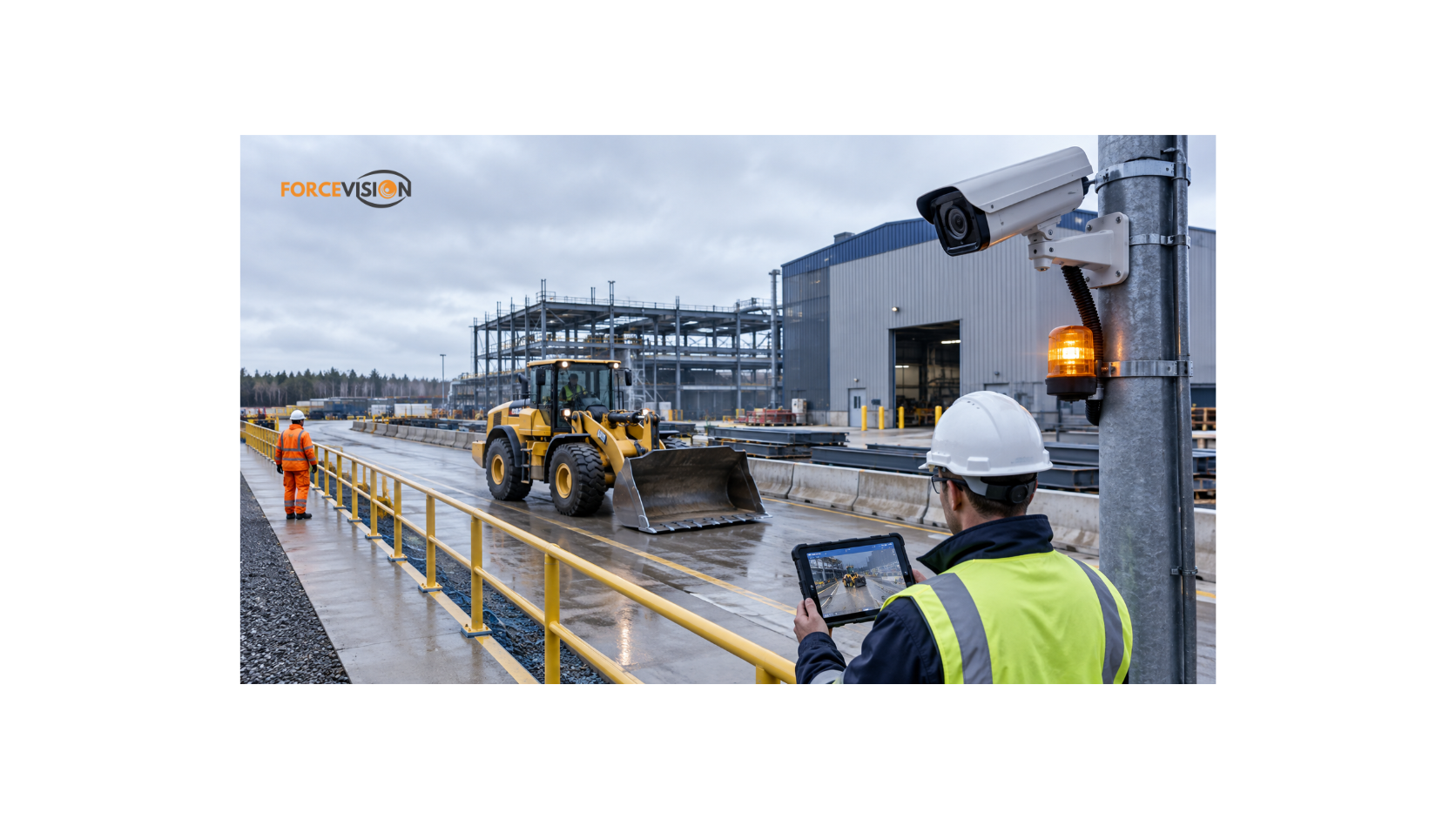
People detection in the travel path. Analytics can recognize a person in a defined zone, such as the path of a transfer table, and trigger local horns, strobes or floor projection lights. This is targeted: the warning goes off when someone is actually in danger, which keeps it meaningful.
Integration with controls. With proper engineering and risk assessment, camera alerts can be linked to the equipment’s control system to pause or slow movement. Any link to machine control must be designed by qualified people and should supplement, not replace, required guarding and safety devices.
Recording for review. Footage of near-misses shows how people actually move through production areas, which often differs from the layout drawing.
Where Should Plants Start?
A practical approach for automated production areas:
-
Map every piece of equipment that moves outside the operator’s direct line of sight.
-
Walk the paths people actually use, including shortcuts between workstations.
-
Add cameras to give operators a clear view of each blind spot.
-
Define analytics zones along travel paths and set local warnings.
-
Review alerts weekly to adjust zones and identify recurring crossings.
-
Re-check coverage whenever the layout or equipment changes.
Combine this with physical measures: marked walkways, barriers where practical and clear rules for crossing production lines.
How Does This Support Operations?
Cameras for safety also improve throughput. Operators who can see the path clearly move equipment with more confidence. Supervisors can see where people and equipment conflict and redesign flows. Footage helps engineering teams diagnose jams and stoppages.
In a large plant, these cameras are part of a broader 64-camera or larger system covering production, shipping and the perimeter, managed through one video platform and NVR. That makes it easy for safety, operations and maintenance teams to share the same view.
ForceVision works with manufacturers across Guelph, Kitchener-Waterloo, Hamilton and the Greater Toronto Area to design camera and analytics systems for automated production areas. If you are adding automation or reviewing blind spots, we can help you plan coverage.
The Takeaway
Stand at each control station in your plant and ask what the operator cannot see when they press start. Every blind spot is a candidate for equipment movement warning cameras, and a conversation to have with your health and safety committee this month.
FAQ
Q: What does section 33 of Regulation 851 require?
A: Employers must ensure workers are warned when equipment that cannot be fully seen from the control station starts moving and could endanger a worker.
Q: Can cameras stop machines automatically?
A: With proper engineering and risk assessment they can be linked to controls, but they should supplement, not replace, required guarding and safety devices.
Q: Why use people detection instead of a constant light?
A: Targeted warnings go off only when someone is in the path, so workers do not tune them out.
Q: Which equipment needs this attention?
A: Transfer cars, shuttle tables, AGVs, cranes, conveyors, palletizers, robotic cells and automated storage systems.