Why do Ontario warehouses need larger CCTV systems now?
Warehouses and distribution centres across Ontario handle millions of dollars in inventory, from consumer goods to industrial components. Rising cargo theft trends and complex supply chains have put pressure on operators to improve physical security and visibility. At the same time, indoor operations have become more automated and fast‑paced, increasing the need to monitor safety, congestion, and process bottlenecks. For many sites, a 16‑camera legacy system that once seemed adequate no longer matches today’s risk profile.facebookFV-Blog-Excel-V1-Week-1.csvgarda+1
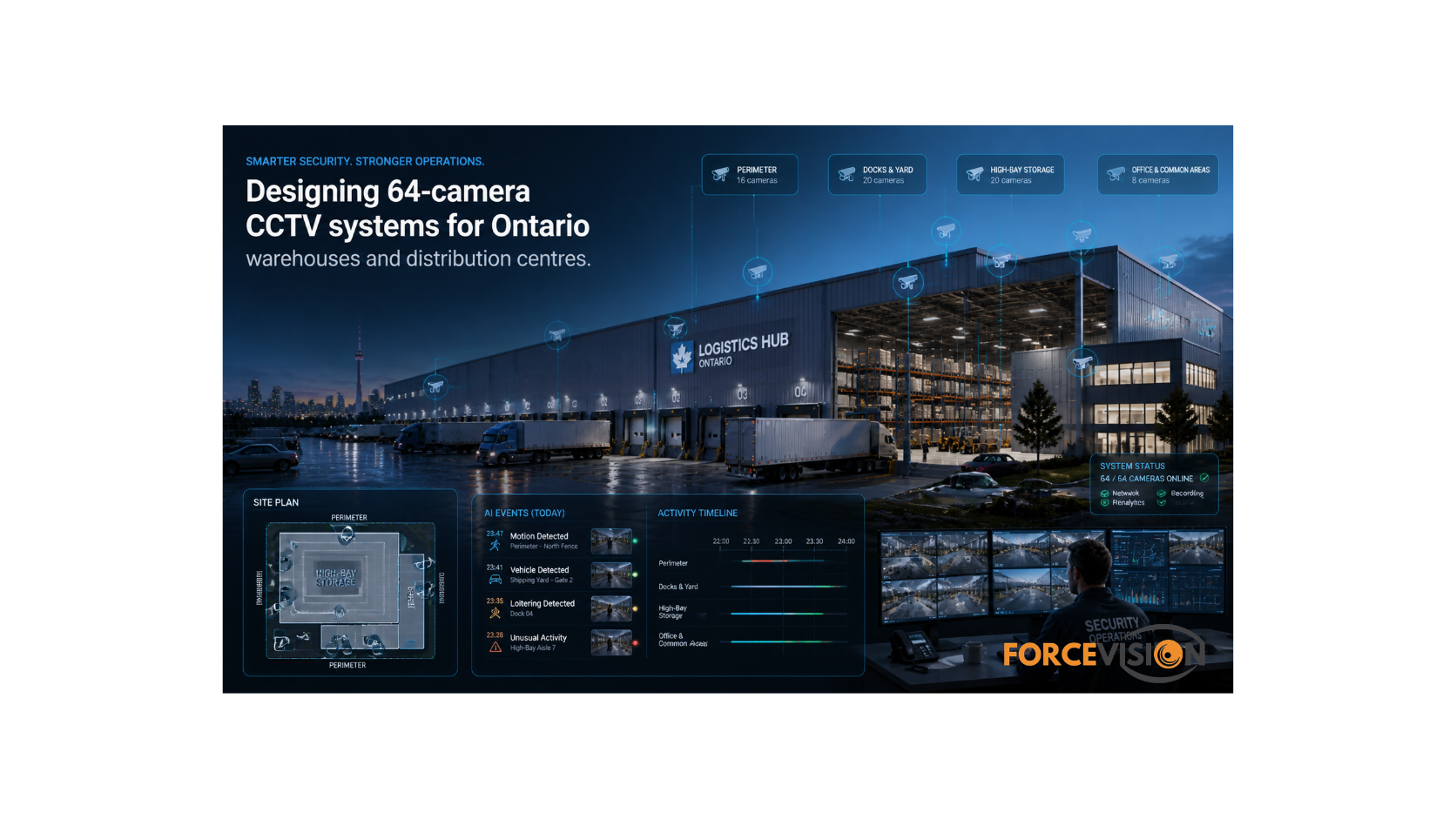
In this context, 64‑camera CCTV for Ontario warehouses is emerging as a practical baseline for mid‑to‑large facilities. It allows operators to cover indoor aisles, mezzanines, docks, office areas, and outdoor yards without major blind spots. When combined with video analytics, such systems do more than capture theft; they help warehouse managers understand how goods move through the building, where congestion occurs, and how people are using space, supporting both security and operational improvement.FV-Blog-Excel-V1-Week-1.csvgarda
How should operators plan camera coverage inside the warehouse?
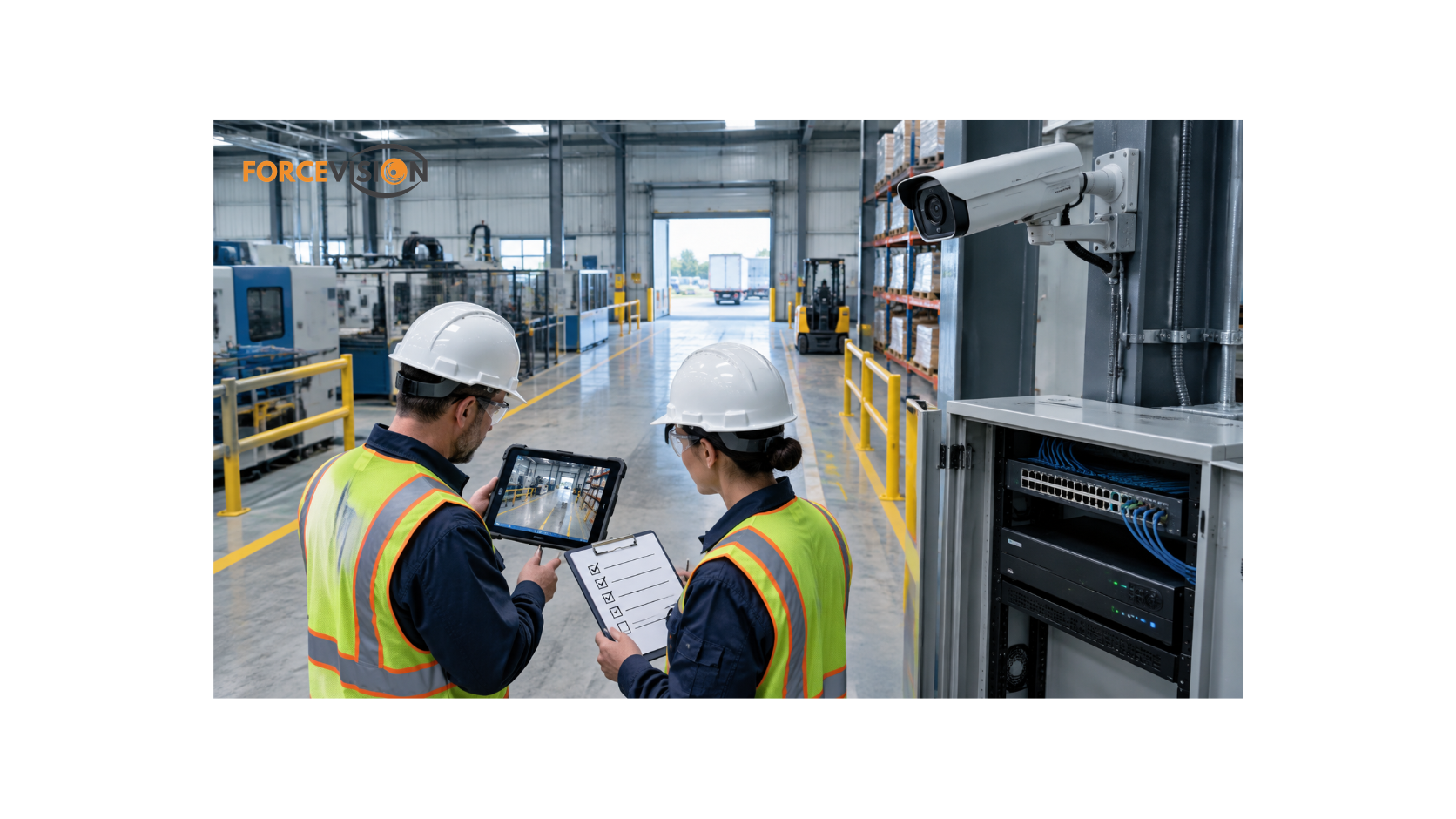
Effective coverage begins with a mapping exercise. Warehouse teams should walk the facility, marking high‑value zones, critical process areas, and safety hotspots on a floor plan. Cameras should be placed to oversee dock doors, inbound and outbound staging, pick and pack areas, high‑value cages, and pallet racking aisles. Dome cameras mounted in the ceiling or on support columns can provide wide views of aisles, while bullet cameras focused on specific doors or zones capture detailed activity.FV-Blog-Excel-V1-Week-1.csv
Overlapping fields of view are important. The aim is to ensure that any movement of goods — from receiving to storage to shipping — passes through at least one camera’s field of view and preferably two. This makes it far easier to reconstruct events when inventory discrepancies arise. Areas where staff work with forklifts, reach trucks, and conveyor systems should receive particular attention, both for safety monitoring and for documenting incidents when they occur.FV-Blog-Excel-V1-Week-1.csvgarda
What about outdoor yards, loading bays, and perimeter?
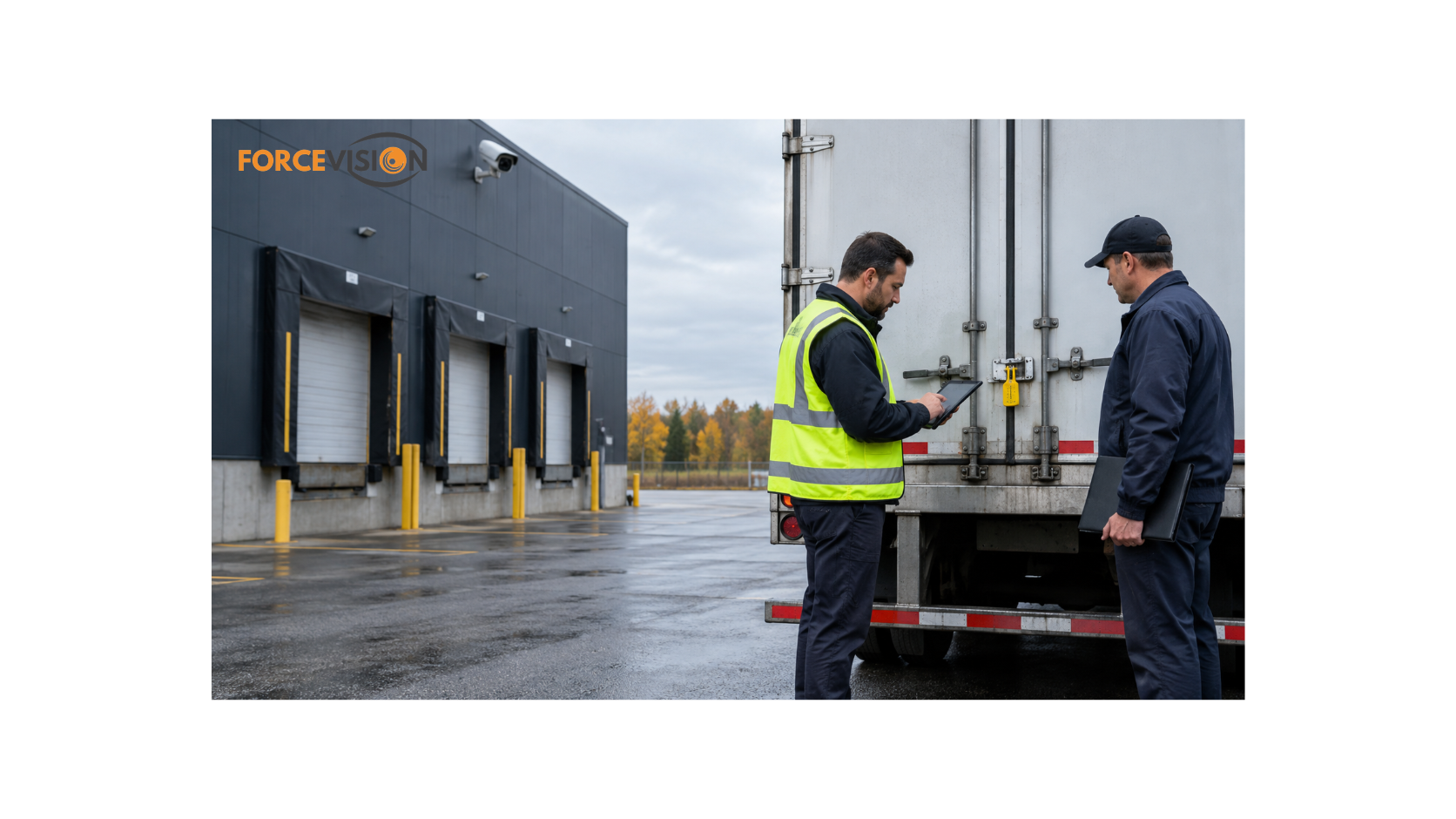
Warehouse operations rarely end at the dock doors. Trailers queuing for loading, containers in yard storage, and temporary outdoor staging areas all represent significant risk. Outdoor IP cameras with appropriate housing should be installed to cover yard entrances, trailer rows, and pedestrian paths around the building. PTZ cameras mounted on building corners or poles can provide flexible coverage of large areas, allowing security teams to follow vehicles, zoom into plate numbers, or observe unusual movements around the perimeter.garda+1
Perimeter cameras along fences and access roads are also crucial, especially in areas close to urban crime hotspots or major highways. They help detect trespassing, fence tampering, and vehicles loitering near gates after hours. For multi‑building sites, cameras should be used to monitor shared yards and cross‑dock areas where goods and vehicles move between facilities. With a 64‑camera system, it becomes practical to allocate sufficient outdoor coverage while still maintaining strong indoor visibility.FV-Blog-Excel-V1-Week-1.csvontarioconstructionnews+1
How do video analytics enhance warehouse CCTV?
Beyond traditional recording, video analytics can turn CCTV into a source of operational intelligence for warehouses and distribution centres. Software can monitor occupancy and movement in high‑traffic zones, flag people entering restricted cages, alert supervisors when forklifts enter pedestrian‑only areas, or detect objects left in safety walkways. Over time, this data reveals patterns of unsafe behaviour, congestion, and process inefficiencies that can be addressed through training or layout changes.FV-Blog-Excel-V1-Week-1.csvmdpi+1
Analytics can also help with theft prevention. Virtual tripwires around high‑value zones, alerts for after‑hours movements, and people or vehicle recognition can make it harder for internal or external thieves to move goods unnoticed. When incidents occur, searchable video data allows investigators to quickly locate relevant footage instead of manually reviewing hours of recordings. For busy sites, this can mean the difference between resolving an issue in hours versus days.garda+2
How does CCTV support insurance, audits, and HR in warehouses?
Insurers increasingly look for evidence of robust surveillance, access control, and safety measures in large warehouse environments. Demonstrating that your facility uses 64‑camera CCTV with coverage of key zones, sufficient retention, and structured incident review can strengthen your position in insurance discussions and claims. Video records of loading, sealing, and dispatch help determine where accountability lies in the event of loss or damage.ismworld+1
CCTV also supports internal audits and HR processes. Footage can be used to review near‑miss incidents, verify compliance with safety policies, and support coaching conversations about forklift operation and pedestrian behaviour. When handled carefully and transparently, video evidence can build a culture of safety and accountability, rather than fear, by providing objective insights into how work is actually performed on the floor.FV-Blog-Excel-V1-Week-1.csv
How can ForceVision help design and implement warehouse CCTV?
ForceVision helps warehouse and distribution operators across Southern Ontario design and deploy 64‑camera CCTV systems tailored to their layouts, risk profiles, and operational objectives. Rather than simply adding more cameras, ForceVision works with your team to map risk zones, operational flows, and existing infrastructure. The outcome is a coherent camera plan that covers docks, aisles, yards, and perimeters, supported by NVR platforms and analytics capabilities aligned with your priorities.
If your warehouse is considering an upgrade from a smaller system, ForceVision can guide you through a phased approach that delivers early wins in high‑risk areas while building toward full 64‑camera coverage. This consultative process helps warehouse leaders justify investment in terms of reduced loss, improved safety, and clearer operational visibility.
What should warehouse decision‑makers review this year?
Leaders should start by asking three simple questions: what are our most valuable assets and processes, where are our blind spots, and how long could we reconstruct an incident using current CCTV? If answers reveal gaps in coverage or limited retention, it may be time to plan a structured 64‑camera upgrade. Review incident logs, insurance claims, and worker safety reports, and compare them with camera coverage; misalignment here is a strong signal that surveillance needs attention.
Taking a practical, staged approach to CCTV design — beginning with critical docks, high‑value zones, and perimeters, then expanding to broader operational areas — can deliver measurable improvements without overwhelming capital budgets. For Ontario warehouses and distribution centres facing rising theft and complexity, a modern 64‑camera system is fast becoming an essential part of running a resilient operation.
FAQ
Q1: Is a 64‑camera CCTV system overkill for a single warehouse?
For small sites it may be more than needed, but mid‑to‑large warehouses and multi‑building distribution centres often require that scale to avoid blind spots around docks, aisles, and yards.
Q2: Do we need video analytics, or are cameras alone enough?
Cameras alone help after the fact; analytics enable proactive alerts, trend analysis, and smarter safety and process improvements, so they add significant value for busy sites
Q3: How long should warehouse CCTV footage be retained?
Many operators target 30–90 days of retention in key zones to support investigations, audits, and insurance claims, especially where inventory turnover is high.
Q4: How does ForceVision support multi‑site warehouse operations?
ForceVision designs enterprise‑grade video platforms that connect multiple warehouses, allowing central teams to view, manage, and analyse footage from across Southern Ontario locations.