At about 4:15 p.m. on Wednesday, October 7, Peel police were called to an industrial yard on Auction Lane, near Queen Street and Goreway Drive in Brampton. A man was found without vital signs and, despite CPR, was pronounced dead at the scene. Police said a tow truck was involved, according to CP24.
The site appears to be a large lot full of parked vehicles, CBC News reported. The Ministry of Labour is leading the investigation, with help from Peel’s 21 Division criminal investigation bureau. Officials have not released how the man died, or his age, occupation or employer.
Until the ministry finishes its work, nobody should guess at the cause. But the incident is a sobering reminder of a hazard that exists at hundreds of Ontario sites every day: people on foot working among moving vehicles.
Why Are Vehicle Yards So Hazardous for Pedestrians?
Tow yards, auction lots, impound yards, fleet depots, truck terminals and vehicle processing centres share the same challenge. They are packed with parked vehicles, and they constantly move more of them.
Drivers manoeuvre in tight rows, often in reverse, with limited sightlines. Workers walk between vehicles to inspect, tag, photograph or hook them. Visitors and customers sometimes walk the lot too. Every parked vehicle is a potential blind spot.
The numbers are a reminder of what is at stake. Ontario’s Ministry of Labour recorded 28 worker deaths and 2,187 critical injuries in its industrial program in 2024-25, and the critical-injury total was a six-year high, according to Canadian Occupational Safety.
What Does a Good Yard Traffic Plan Include?
Workplace Safety & Prevention Services (WSPS) says yards where trucks, mobile equipment and pedestrians mix need an exterior traffic plan. “If traffic is left haphazard or unpredictable, oftentimes you’ll see problems,” WSPS consultant Norm Kramer told Canadian Occupational Safety. WSPS recommends marking pedestrian-vehicle crossing points, requiring high-visibility vests and keeping yards well lit.
A complete plan usually adds:
-
One-way traffic routes and defined speed limits.
-
Designated walkways and “no-walk” zones.
-
Rules for reversing, including spotters where needed.
-
Separate visitor routes and check-in.
-
Clear rules for where tow trucks hook and unhook vehicles.
The plan is the foundation. Cameras help make sure it works in practice.
How Do Vehicle Yard Traffic Safety Cameras Help?
Vehicle yard traffic safety cameras support the traffic plan in several ways.
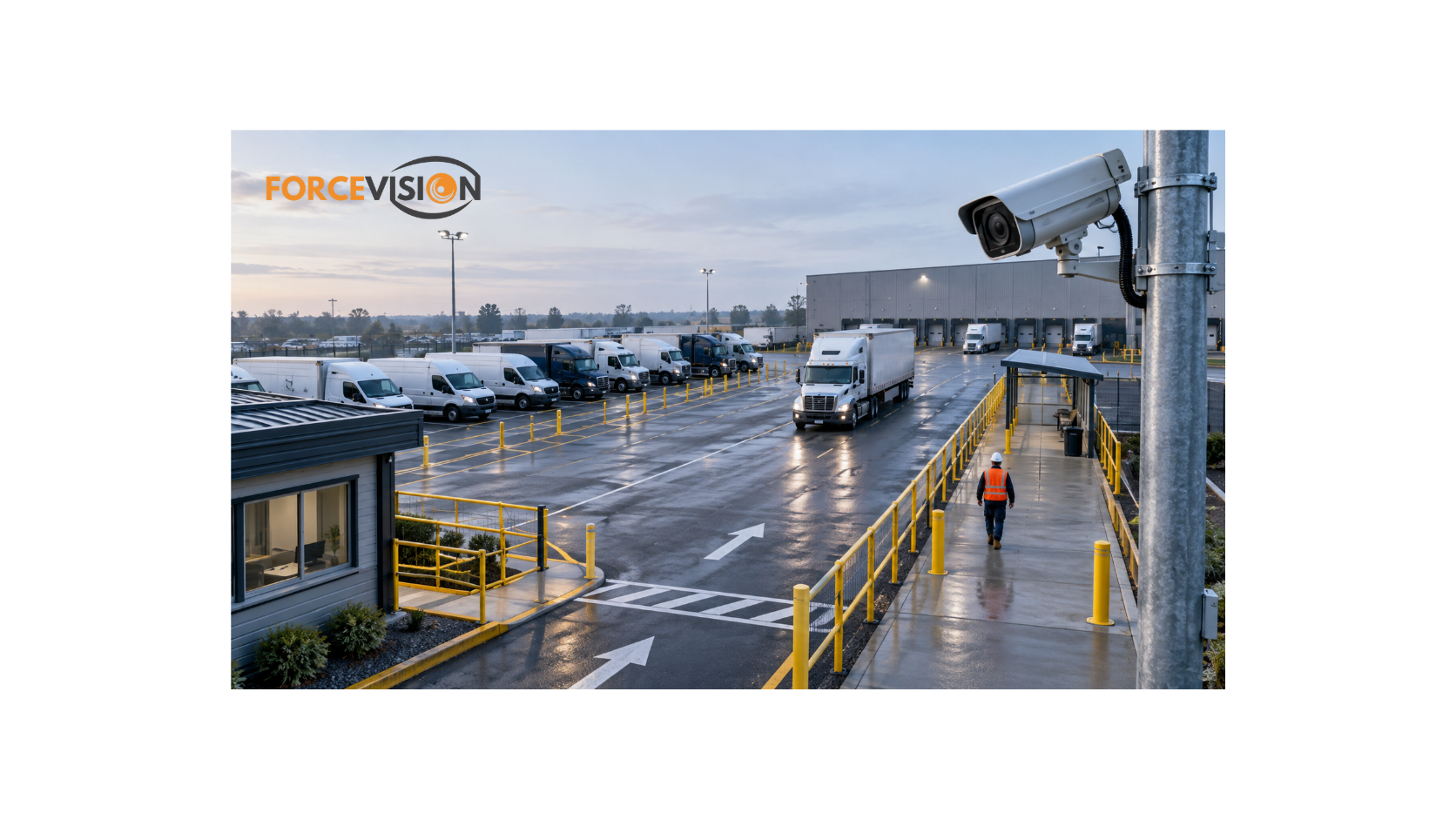
See the whole lot. PTZ cameras on high masts give supervisors a live view of busy rows, entry lanes and hook-up areas. They can quickly spot congestion, unsafe reversing or people in no-walk zones.
Analytics for pedestrians in vehicle zones. Video analytics can detect a person entering an area reserved for vehicles, or a vehicle entering a pedestrian area, and trigger an alert to a supervisor or a warning light at the location.
Speed and direction monitoring. Cameras can flag vehicles travelling the wrong way down a one-way lane or moving too fast through the lot.
Coverage of high-risk spots. Fixed cameras at gates, hook-up and drop-off areas, and loading ramps record activity where most interactions between people and vehicles happen.
Vehicle-mounted cameras. Backup and 360-degree cameras on tow trucks and yard vehicles reduce blind spots for drivers. Recording dash cameras add a record of each move.
How Does Footage Help After an Incident?
When a serious incident happens, Ontario’s Occupational Health and Safety Act requires employers to notify an inspector immediately and, with limited exceptions, not to disturb the scene until an inspector permits it, as Canadian Occupational Safety explains.
Preserving footage is part of preserving the scene. Clear video helps investigators understand what happened, which supports the ministry, the employer, the family and every worker who returns to the yard. Make sure footage can be quickly exported and protected from being overwritten.
Beyond serious incidents, reviewing near-misses on video is one of the most effective ways to improve a traffic plan. A clip of a close call in row 14 starts a far better safety talk than a generic slideshow.
How Does This Support Workers and Retention?
Yard workers often work alone, outdoors and in all weather. When they see that management takes traffic safety seriously, with clear routes, good lighting and cameras that watch for danger, they feel more valued and stay longer.
Be transparent. Explain how cameras are used, focus on coaching rather than discipline, and include it in your electronic monitoring policy.
ForceVision designs camera systems for vehicle yards, fleet depots and truck terminals across Brampton, Mississauga and the Greater Toronto Area. If you would like help reviewing coverage of your lot, our team can walk it with you and your safety lead.
The Takeaway
Walk your yard at the busiest hour and watch where people and vehicles actually cross paths. Then compare that to your traffic plan. If they do not match, it is time to update the plan and look at vehicle yard traffic safety cameras to help keep it working.
FAQ
Q: Do Ontario yards need a traffic plan?
A: WSPS recommends an exterior traffic plan wherever trucks, mobile equipment and pedestrians mix, including marked crossings, high-visibility vests and good lighting.
Q: Can cameras detect people in vehicle-only areas?
A: Yes. Video analytics can detect people entering vehicle zones, or vehicles entering pedestrian areas, and trigger alerts or warning lights.
Q: What should we do with footage after a serious incident?
A: Preserve it immediately, prevent it from being overwritten and make it available to the Ministry of Labour inspector.
Q: Are vehicle-mounted cameras worth it in yards?
A: Yes. Backup and 360-degree cameras reduce blind spots for drivers manoeuvring in tight rows.